
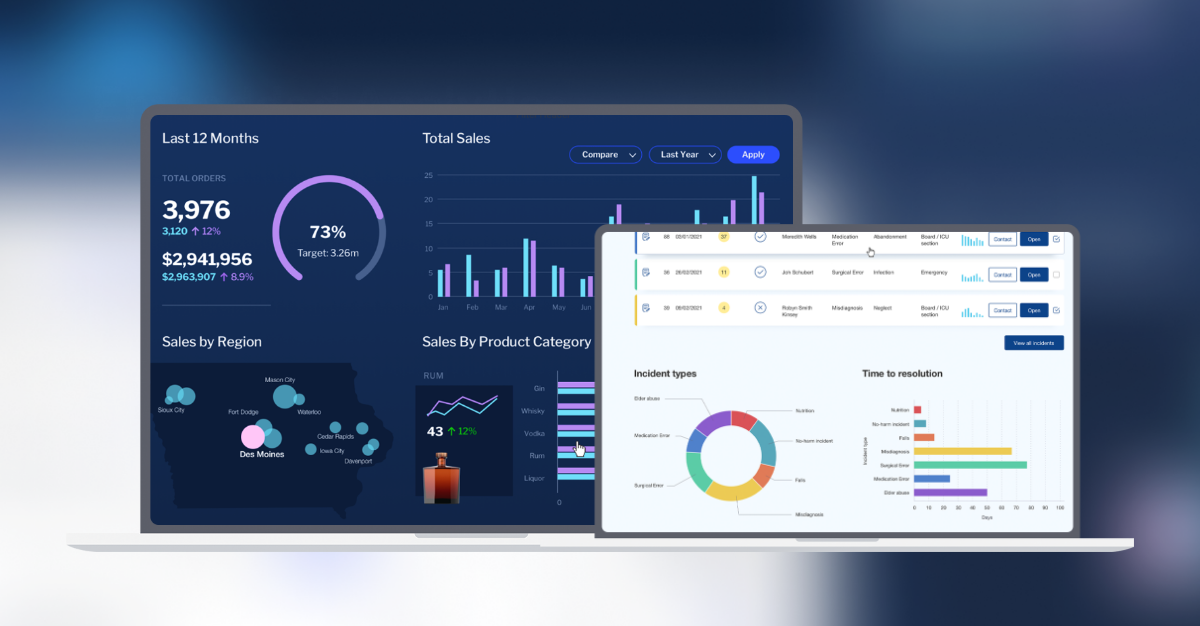

Health applications no longer function as simple record systems. They manage appointments, billing, monitoring devices, communication logs, and outcome tracking all at once.
That creates volume. And volume creates confusion if it is not structured.
Built in reporting helps transform raw data into something usable. When a saas healthcare software data reporting tool operates inside the application itself, users do not have to search for answers elsewhere. Insight appears where work already happens.
That proximity matters more than most teams expect. Because when analytics feels separate, it often gets ignored.
Embedded analytics makes it possible to layer these perspectives without mixing them. Access controls determine visibility. Interfaces adjust based on user type. Flexibility becomes essential.
Flexible architecture for evolving healthcare needs
Healthcare regulations, workflows, and technologies change often. Software must adapt.
Embedded analytic systems are expected to grow alongside the platform. That means supporting:
- New data sources
- Updated compliance requirements
- Expanded user groups
- Additional performance indicators
A rigid reporting system quickly becomes outdated.
Sometimes teams do not realize this until expansion begins. What worked for a small deployment may struggle when scaled to multiple facilities.
So architecture matters from the beginning.
Reporting tools beyond spreadsheets and exports
Spreadsheets still exist in healthcare workflows. They are familiar and flexible.
But exporting data repeatedly creates fragmentation. Multiple versions circulate. Manual edits introduce risk. Context gets lost.
Embedded analytics reduces reliance on static exports. Dashboards update automatically within the system. Filters allow users to explore details without copying files.
This shift does not eliminate external reporting entirely. Some regulatory submissions still require structured exports.
Yet daily analysis becomes smoother when insight lives inside the application. Less switching. Fewer mismatches.
Adapting insights for different organizational sizes
A small clinic may monitor only a few key metrics. A regional hospital network might track dozens across departments.
One size rarely fits all.
A scalable saas healthcare software data reporting tool supports both scenarios. It can remain simple for smaller teams while expanding for complex environments.
And sometimes organizations evolve quickly. A digital health startup may start with a focused dataset and then expand into broader service areas.
Analytics must keep pace.
Embedded reporting is not just a technical feature. It becomes part of how healthcare software delivers clarity, supports decision making, and adapts over time.
When designed carefully, it blends into daily workflows so naturally that users stop noticing the tool itself. They just notice that decisions feel more informed.
The Growing Role Of Embedded Analytics In Health Applications
