
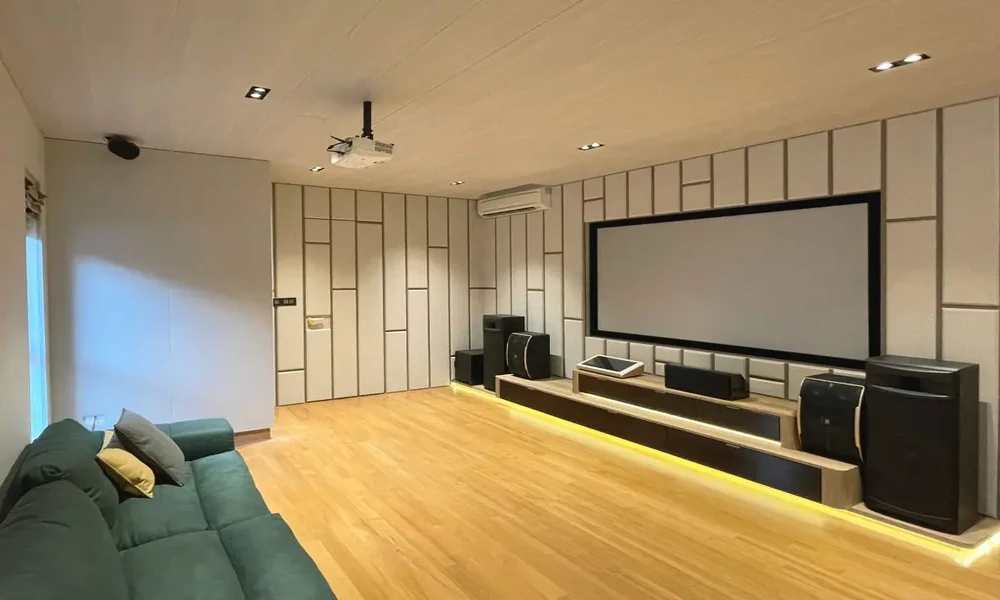

Spend enough time in any city like Singapore, and you start to notice that sound behaves differently indoors. It’s not just traffic or construction outside. Even inside offices, cafés, and homes, there’s often a layer of background noise that builds up throughout the day.
What makes it tricky is that these issues aren’t always obvious at first. A space might look well-designed, clean, and modern, yet still feel slightly uncomfortable after a while. In many cases, the problem comes down to how sound moves and reflects within the environment.
That’s where acoustic treatment available in Singapore comes in. It’s not about removing sound completely. It’s about managing how it travels, reflects, and settles in a space. In a dense, fast-paced environment like Singapore, that makes a bigger difference than most people expect.
Let’s take a closer look at five common noise-related issues and how acoustic treatment helps solve them.
1. Echo and sound reflections in open-plan offices.
Open-plan offices are common across Singapore, especially in newer commercial developments. They encourage collaboration and make better use of space, but they also come with acoustic challenges.
Hard surfaces like glass partitions, polished floors, and exposed ceilings reflect sound easily. Conversations bounce around the room, creating an echo effect that builds up over time. Even normal discussions can start to overlap, making it harder to focus.
Acoustic panels, ceiling baffles, and wall treatments help absorb these reflections. Instead of sound bouncing endlessly, it’s controlled and contained. The result is a workspace where conversations feel clearer and less distracting, without needing to change the layout entirely.
2. Poor speech clarity in meeting rooms.
Meeting rooms are designed for communication, yet they’re often one of the most problematic areas when it comes to acoustics.
Glass walls, large tables, and minimal soft furnishings can create a situation where voices reflect off multiple surfaces before reaching the listener. This can make speech sound slightly muddled, especially during group discussions or video calls.
Acoustic wall panels placed at key reflection points help improve speech clarity. Ceiling panels can also reduce the vertical reflections that contribute to the issue. Together, these treatments create a more controlled environment where conversations feel more direct and easier to follow.
In a business setting, that small improvement can have a noticeable impact on productivity and communication.
3. Noise build-up in restaurants and cafés.
Dining spaces across Singapore often prioritise aesthetics. High ceilings, concrete finishes, and large open layouts are popular design choices. While these look great, they can cause sound to accumulate quickly once the space fills up.
As more people talk, laugh, and move around, sound reflections increase. This can create an environment where conversations become harder to follow, and the overall atmosphere feels more intense than intended.
Acoustic treatment helps balance this out. Ceiling panels, wall-mounted panels, and even upholstered seating can reduce excessive reflections. Instead of sound building up uncontrollably, it remains more even throughout the space.
For diners, this means being able to enjoy conversations comfortably. For staff, it makes communication during busy periods much more manageable.
4. Sound travelling too easily in open-plan homes.
Modern homes in Singapore, particularly apartments and condominiums, often feature open layouts. Kitchens, dining areas, and living rooms flow into one another without many physical barriers.
While this creates a sense of space, it also allows sound to travel freely. Cooking noise, television audio, and conversations can all overlap, especially when multiple activities are happening at once.
Acoustic panels can help define these spaces without adding walls. Wall-mounted panels or ceiling treatments absorb sound within specific zones, reducing how strongly it carries across the entire area.
This creates a more balanced living environment where different activities can happen simultaneously without clashing acoustically.
5. External noise seeping into indoor spaces.
Singapore is a busy city, and external noise is part of daily life. Traffic, construction, and general urban activity can all find their way indoors, particularly in buildings located near main roads or active commercial areas.
While acoustic panels are primarily used to manage internal sound, they can also help reduce the impact of external noise when combined with proper insulation and glazing.
Wall treatments add an extra layer of absorption, helping to minimise how much external sound reflects within the room. Instead of noise bouncing around once it enters, it’s dampened more effectively.
This doesn’t eliminate outside noise entirely, but it makes indoor environments feel more controlled and less affected by what’s happening outside.
Why acoustic treatment matters in Singapore.
What makes these issues more relevant in Singapore is the combination of urban density and modern design trends.
Buildings are often close together, and spaces are designed to maximise efficiency. This means sound has more opportunities to travel between areas, both inside and outside.
At the same time, contemporary interiors tend to favour hard, reflective materials. While visually appealing, these surfaces don’t do much to control sound on their own.
Acoustic treatment fills that gap. It allows designers and property owners to maintain clean, modern aesthetics while improving how a space feels in everyday use.
It’s not just about reducing noise.
One common misconception is that acoustic treatment is only about making a space less noisy. In reality, it’s more about improving sound quality.
A well-treated space still has sound, but it feels more organised. Conversations are clearer. Background noise doesn’t compete as aggressively for attention. The overall environment feels more comfortable, even during busy periods.
This is especially important in workplaces, hospitality settings, and homes where people spend long periods of time.
Design flexibility has improved significantly.
Another reason acoustic treatment is becoming more popular in Singapore is the variety of design options available.
Panels now come in different colours, shapes, and finishes. Some are designed to blend seamlessly into walls or ceilings, while others act as visual features.
This flexibility makes it easier to integrate acoustic solutions into a space without compromising the overall design. In many cases, they enhance it.
Final Thoughts
Noise issues in indoor spaces aren’t always obvious, but they have a real impact on comfort and usability. From echo in offices to sound build-up in restaurants and homes, these challenges are common across Singapore.
Acoustic treatment offers a practical way to address them. It doesn’t require major structural changes, yet it can significantly improve how a space feels daily.
Once installed, most people won’t actively think about it. What they’ll notice instead is that conversations feel easier, environments feel more balanced, and spending time in the space simply feels better overall.
